

(TAP) - Vietnam’s Ministry of Foreign Affairs has issued a response to a new U.S. investigation into industrial overcapacity under Section 301. A spokesperson affirmed that Vietnam will cooperate with the United States to clarify relevant policies.
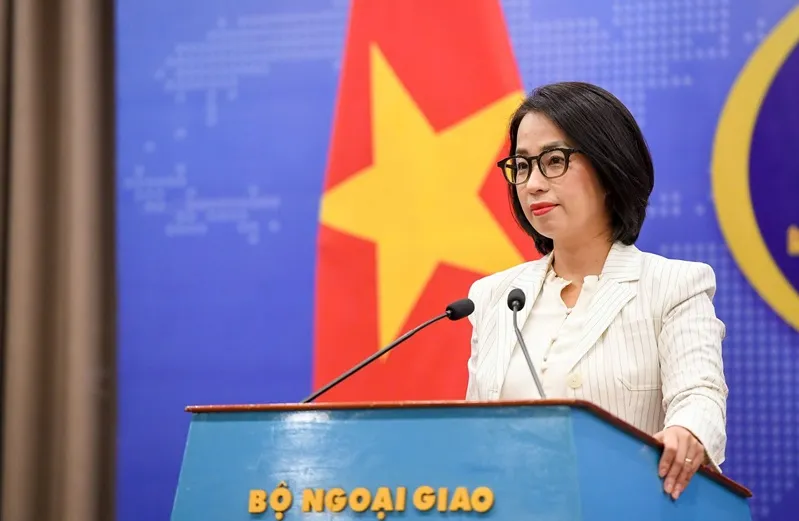
At the regular press briefing on March 19, Vietnam’s Ministry of Foreign Affairs Spokesperson Pham Thu Hang responded to reporters’ questions about Vietnam’s reaction to information that the United States is initiating a new trade investigation into industrial overcapacity across 16 major trading partners, including Vietnam. Spokesperson Pham Thu Hang stated that Vietnam’s economy operates fully and consistently according to market principles, and that many countries have recognized Vietnam’s market economy status. She affirmed that production and business activities in Vietnam are always oriented toward sustainable development and strictly comply with relevant regulations, including those established by the World Trade Organization (WTO).
Source: mofa.gov.vn
The representative of the Ministry of Foreign Affairs emphasized that, over recent times, economic, trade, and investment relations between Vietnam and the United States have consistently developed positively, bringing benefits to businesses as well as the people of both countries. According to Spokesperson Pham Thu Hang: “We regularly exchange and hold dialogues with the U.S. side and will continue to work closely with the relevant U.S. agencies to share information, clarify Vietnam’s policies and regulations, aiming to build a stable, long-term, and mutually beneficial economic cooperation framework between the two countries”.
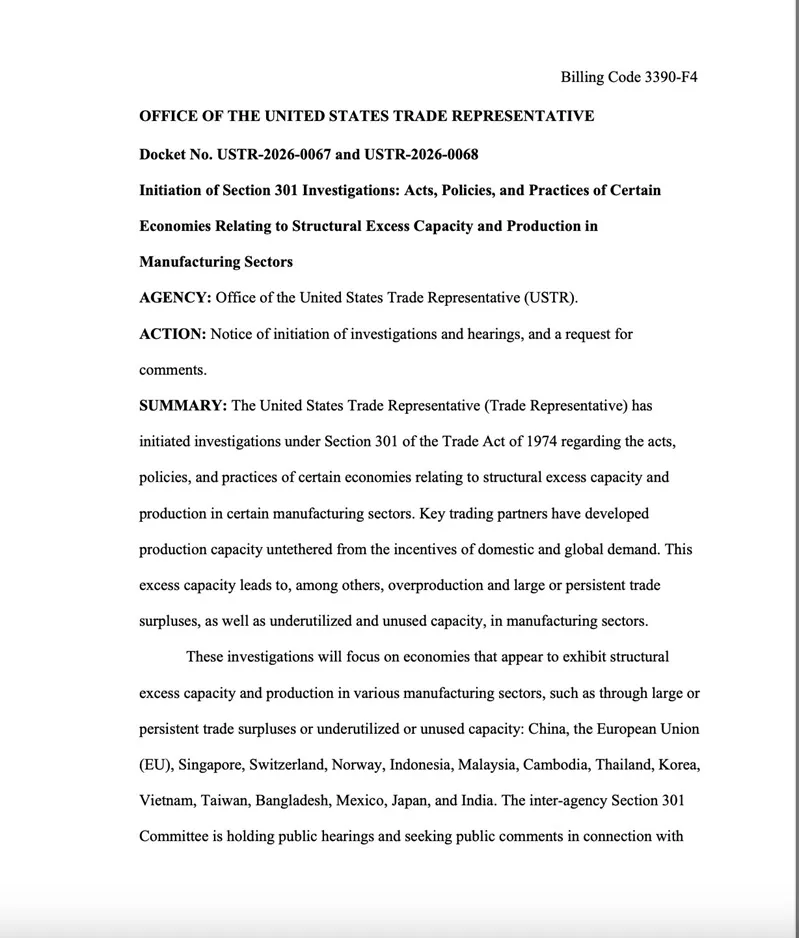
Earlier, on March 11, the United States Trade Representative (USTR) announced that it was targeting industrial overcapacity in 16 trading partners under Section 301 of the Trade Act of 1974. The list of countries under investigation includes: China, the European Union, Singapore, Switzerland, Norway, Indonesia, Malaysia, Cambodia, Thailand, South Korea, Vietnam, Taiwan, Bangladesh, Mexico, Japan, and India.
U.S. Trade Representative Jamieson Greer explained: “The investigation focuses on economies where we have evidence of structural overcapacity in multiple manufacturing sectors. This is demonstrated by large, sustained trade surpluses or underutilized production capacity”. This is part of efforts to restore tariff pressure, following the Supreme Court (SCOTUS) decision in February that struck down a series of tariffs imposed by President Donald Trump under the International Emergency Economic Powers Act (IEEPA).
Source: ustr.gov
Mie Duong