

(TAP) - As the final days of the year gently arrive, Vietnamese people begin preparing for the year-end ceremony - a ritual that marks the close of one cycle of time and opens a moment of transition between the old and the new. More than just a spiritual practice, the year-end ceremony is also an invisible thread that preserves memories and connects generations within the family home.
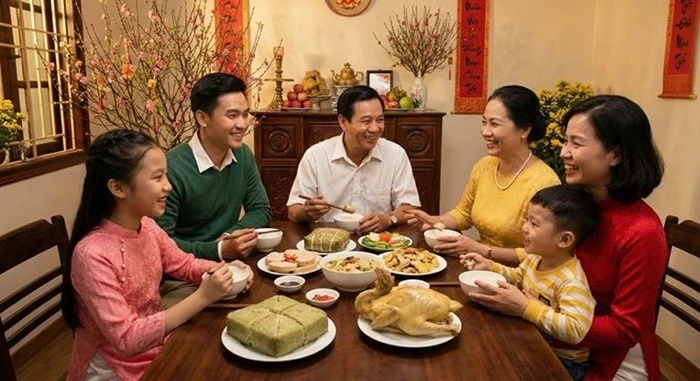
The year-end ceremony marks the end of the lunar year and is often associated with a warm family meal or gathering of relatives and friends. Source: Mua Quà Tết VN (Pinterest)
“Tat” means completion, and “nien” means year. Though simple, the two words carry deep meaning: closing a journey that has passed to prepare for a new one ahead. The year-end ceremony is usually held on the last day of the lunar year - the 30th day of the twelfth lunar month in a full year, or the 29th in a short year. However, in modern life, many families choose to hold it earlier, from the 27th or 28th day of Tet, so that the whole family can gather together.
Before the year-end feast, Vietnamese families carry out other sacred activities such as visiting ancestral graves, cleaning the altar, wiping each carved plaque, polishing bronze incense burners, replacing cups of water, and arranging fresh flowers. On the final day of the year, the year-end offering tray is carefully prepared with incense and candles, fresh flowers, a five-fruit tray, betel and areca, tea and wine, rice and salt, along with either savory or vegetarian dishes depending on each family’s circumstances. Rising incense smoke fills the warm space, serving as a symbolic bridge between descendants and their ancestors - between those gathered in reunion and those who have passed on.
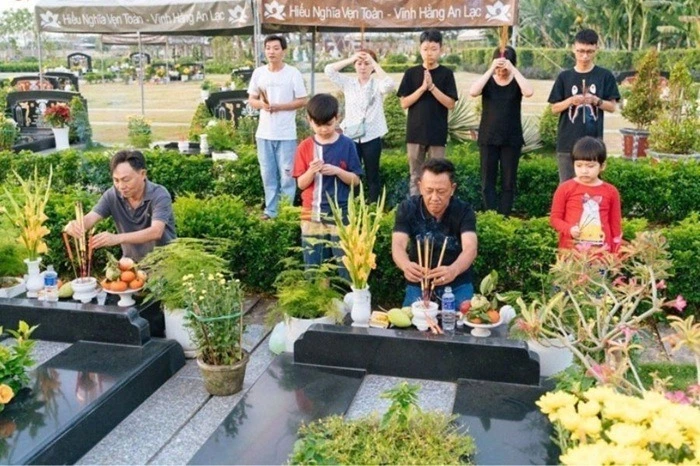
Year-end grave-visiting custom. Source: bTaskee Co., Ltd. (Pinterest)
Year-end cuisine across Vietnam’s three regions carries its own distinct flavors, yet all deeply infused with the spirit of Tet. In the North, the meal is carefully prepared with Chung cake, pickled onions, bamboo shoot soup, pork sausage, and red sticky rice bright as the color of spring. In the Central region, flavors are rich with fish sauce, featuring brine-preserved pork, pickled vegetables, and braised dishes imbued with the flavors of sun and wind. In the South, the generous spread features Vietnamese braised pork with eggs, stuffed bitter melon soup carrying the wish for hardships to pass, along with Tet cake and pickled scallions with dried shrimp.
After the offering ritual comes the reunion meal - the most sacred moment of the year-end ceremony. There, laughter mingles with stories of the year gone by, unfinished plans, and hopes waiting ahead. Adults recall old memories, while children eagerly await their first lucky envelopes of the new year. Time seems to slow down, leaving only the warmth of family reflected in every glance.
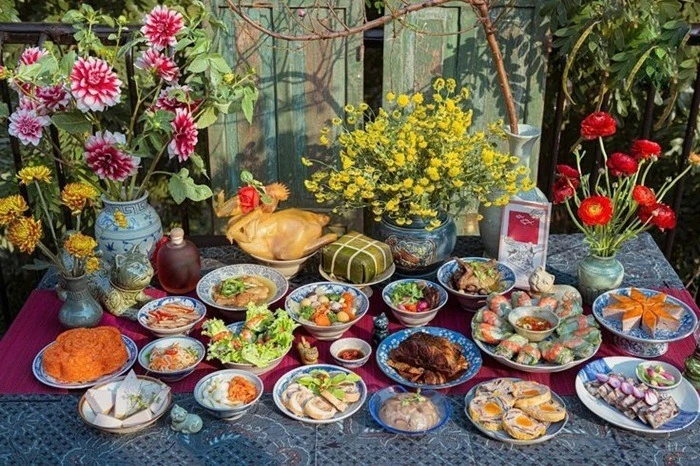
Year-end offering tray. Source: VGT TV – Việt Giải Trí (Pinterest)
Whether in the countryside or the city, whether the meal is lavish or simple, the Vietnamese year-end ceremony shares the same spirit: gratitude for the past, appreciation of the present, and a gentle faith in the future. Amid the fast pace of life, that moment reminds everyone that after all the busyness, the most precious thing remains togetherness.
Ngoc Tram